Threat of Super El Nino in fiscal year 2027-28, drought fears in India to hit agriculture and economy hard!
Drop in crop production expected to push up food prices, falling rural consumption raises fears of hit to national GDP growth
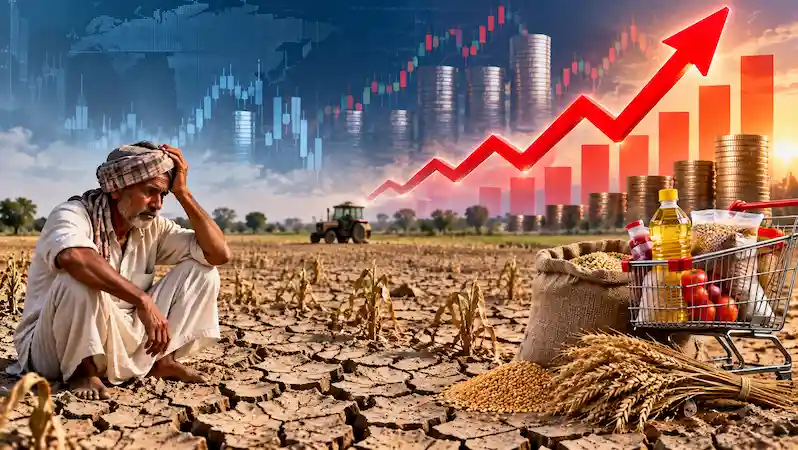
New Delhi/Punjab: Concerns are growing over weather challenges for India's agriculture and rural economy during the financial year 2027-28. According to international climate models and meteorologists, an unusual rise in sea surface temperatures in the Pacific Ocean could trigger a Super El Nino event. This could directly affect the Indian monsoon system, raising fears of significantly below-normal rainfall and drought-like conditions in several agrarian states.
Timeline of the impact across FY 2027-28:
During the first quarter of the fiscal year, from April to June 2027, severe heatwaves could cause natural water reservoirs to deplete rapidly. Following this, between July and September 2027, a weak kharif monsoon could disrupt the sowing of paddy, maize, cotton, and pulses. From October to December 2027, higher-than-normal winter temperatures may negatively affect the development of the wheat crop, and the full impact will show up in overall output numbers by March 2028.
States likely to face the biggest impact:
States in central and western India, such as the Vidarbha and Marathwada regions of Maharashtra, along with Madhya Pradesh, Gujarat, and Rajasthan, could face the brunt first. Rainfall deficits in these areas could reach between 25 and 35 percent. In southern India, states like Karnataka, Andhra Pradesh, and Telangana could also face deep water shortages in their storage reservoirs.
Challenges for Punjab and northern India:
In well-irrigated states like Punjab and Haryana, the land will not turn into a desert, but a serious groundwater crisis will emerge. Lack of rain will force continuous tube well operation, driving water tables further down. This will place a heavy burden on power utilities and force farmers to spend on costly diesel fuel, raising farming input costs by 20 to 25 percent.
Crop losses and inflationary pressure:
Super El Nino could cause a 15 to 20 percent decline in the total yield of pulses, oilseeds, and paddy during the kharif season. A drop in harvest yields will create the risk of rising food inflation during financial year 2027-28, squeezing ordinary household budgets.
How Super El Nino drives slowdown and CPI inflation:
Food items make up about 46 percent of India's Consumer Price Index (CPI) basket. When weak monsoon rains reduce the output of rice, pulses, edible oils, and vegetables, supply shortages will follow. This could push food inflation to between 8 and 10 percent, driving headline CPI inflation past the targeted 6 percent upper limit.
Will India enter an economic recession:
Rather than an outright recession, this scenario is best described as a growth slowdown. Nearly half of India's population relies on agriculture for their livelihood. If crops fail, rural income will take a hit, curbing purchases of tractors, two-wheelers, mobile phones, clothing, and everyday consumer goods (FMCG). This drop in demand could shave 0.5 to 1.0 percentage points off the country's GDP growth rate.
Impact on the Reserve Bank of India (RBI) and interest rates:
Rising CPI inflation will make it impossible for the Reserve Bank of India to cut interest rates. Persistent high interest rates will make borrowing expensive for business investments and keep monthly loan payments (EMIs) elevated for everyday home and car loans.
Preventive steps needed:
Experts say the government must set aside dedicated contingency funds for drought management and crop insurance directly in the FY 2027-28 budget. Farmers need to be encouraged to grow crops that use less water and mature faster. Expanding subsidies for drip and sprinkler irrigation, along with improving canal water networks, will be essential to protect farmers from natural climate shocks.

Comments